Early Birds, Night Owls, and Everyone in Between: How Circadian Rhythms Shape Mental Health
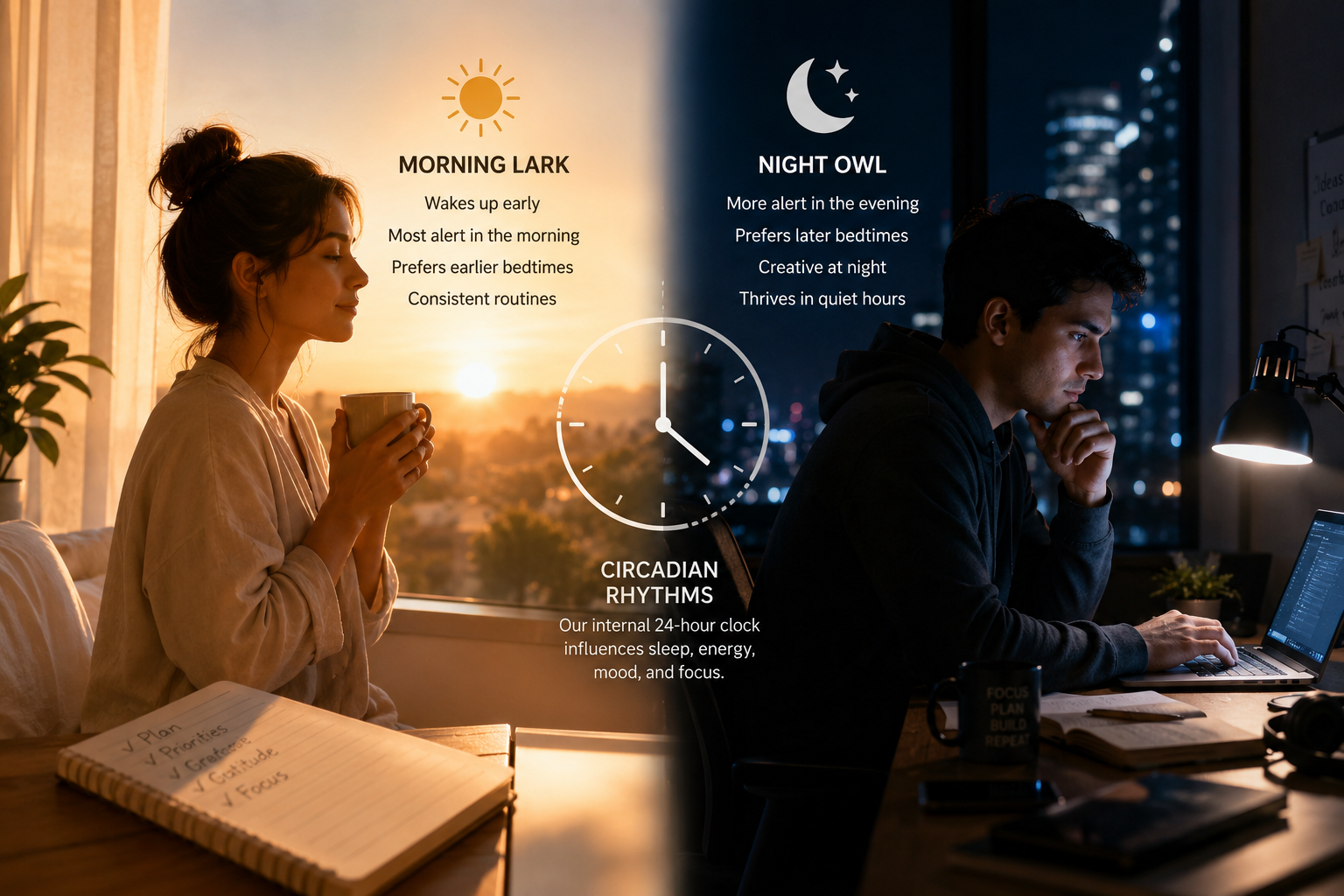
Not everyone is built to thrive at 6 a.m. Some people naturally feel energized at sunrise, while others hit their stride late at night. These differences are not simply about discipline, motivation, or “good habits.” They are largely driven by biology—specifically, our circadian rhythms.
Circadian rhythms are the body’s internal 24-hour clock that regulate sleep, energy, hormones, mood, and cognitive functioning. Researchers refer to individual sleep timing preferences as chronotypes. The most commonly discussed chronotypes are “morning larks” and “night owls,” though most people fall somewhere in between.
Source:
Understanding Different Circadian Rhythms
Morning Larks
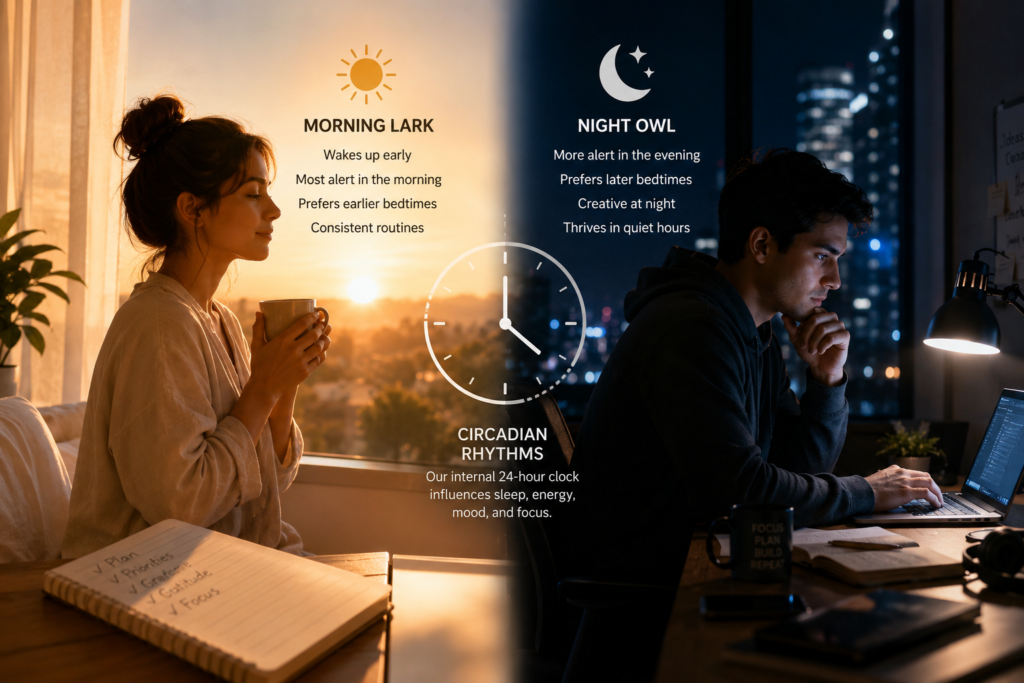
Morning-types naturally wake early, feel mentally sharp in the first half of the day, and usually become tired earlier in the evening. Traditional school and work schedules often align more closely with this pattern, making it socially advantageous. Morning-types also tend to experience more consistent sleep schedules.
Source:
Night Owls
Evening-types, often called night owls, feel more alert later in the day and may naturally prefer going to sleep after midnight. Contrary to common stereotypes, research suggests this is not laziness or poor self-discipline, but a normal biological variation in human sleep patterns.
Source:
Night owls often struggle because modern society tends to favor early schedules. This mismatch between biological rhythms and external expectations is sometimes called social jet lag. Over time, chronic sleep deprivation and repeated schedule misalignment can negatively affect both physical and mental health.
Source:
The “In-Between” Majority
Most people fall somewhere between these two extremes. These individuals may adapt more easily to conventional schedules while still experiencing fluctuations in energy and alertness throughout the day.
Chronotypes can also shift throughout life. Children often lean toward earlier sleep patterns, adolescents commonly shift toward later ones, and many adults gradually become earlier risers again with age.
Source:
The Connection Between Circadian Rhythms and Mental Health
Sleep timing affects far more than tiredness. Circadian rhythms influence emotional regulation, stress response, cognitive functioning, and overall psychological well-being.
Source:
In counseling settings, sleep disruption often overlaps with anxiety, chronic stress, trauma responses, burnout, and hormonal transitions. Understanding someone’s natural rhythms can be an important part of developing realistic wellness strategies rather than relying on self-criticism or unrealistic expectations.
Why Late-Night Wakefulness May Increase Mental Health Risks
A 2024 Stanford Medicine study examining nearly 75,000 adults found that staying awake late into the night was associated with higher rates of mental and behavioral disorders, regardless of whether someone identified as a morning or evening person. Researchers found that even self-identified night owls tended to experience better mental health outcomes when avoiding extremely late bedtimes.
Source:
Researchers proposed several possible explanations, including increased nighttime isolation, rumination, hormone disruption, emotional dysregulation, and unhealthy coping behaviors that may be more likely to occur during overnight hours.
The Hidden Stress of Social Misalignment
Some mental health challenges associated with night owls may stem less from the chronotype itself and more from environmental mismatch. When people are repeatedly forced to wake earlier than their biology prefers, chronic sleep debt and heightened stress responses can develop.
This chronic misalignment has been associated with:
- Increased anxiety and depressive symptoms
- Greater stress reactivity
- Poorer sleep quality
- Fatigue and daytime dysfunction
- Increased risk of unhealthy coping behaviors
Source:
Some studies have also linked evening chronotypes with increased cardiovascular and cognitive health risks, though lifestyle factors such as sleep quality, exercise, nutrition, and substance use likely play a significant role.
Source:
Biological Sleep Differences Are Normal
One of the most important takeaways from current sleep research is that biological diversity in sleep timing is normal.
Human circadian variation may have historically supported group survival, allowing different individuals to remain alert during different parts of the 24-hour cycle. The challenge today is less about being a night owl and more about living in environments that often do not accommodate evening-oriented biology.
Source:
Supporting Mental Health Through Better Circadian Alignment
Improving mental health does not necessarily mean forcing every night owl to become a morning person. Instead, healthier outcomes often come from better alignment between biology, lifestyle, and sleep habits.
Helpful strategies may include:
- Maintaining consistent sleep and wake times
- Reducing bright screen exposure before bed
- Getting morning sunlight exposure
- Avoiding severe weekday sleep deprivation
- Scheduling demanding tasks during natural peak alertness periods
- Creating flexibility in routines when possible
- Prioritizing sleep quality over productivity pressures
Source:
For adolescents and young adults especially, later school start times and flexible scheduling may better support both emotional well-being and academic performance.
Source:
Final Thoughts
Circadian rhythms are deeply connected to mental health, emotional functioning, and overall well-being. While research suggests that extremely late-night schedules may carry mental health risks, it also challenges the assumption that night owls are lazy or undisciplined.
Sleep science continues to show a more nuanced truth: people function differently, and mental health often improves when biological rhythms are understood rather than judged.

Alexis Dunbar
Counselor Intern